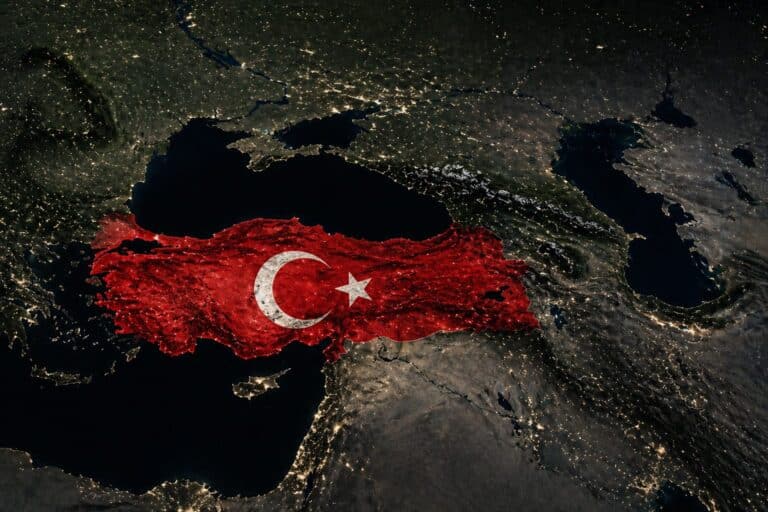
Why data, model, and infrastructure sovereignty are no longer optional for enterprises operating in Europe in 2026.
EMEA PUBLIC SECTOR SERIES
This article is part of the EMEA Public Sector series, exploring why data sovereignty has become a critical priority for governments and public institutions across Europe, the Middle East, and Africa. As regulatory pressure, geopolitical risk, and AI adoption reshape digital strategies, data sovereignty is emerging as a key pillar of modern public sector data platform architectures, enabling control, resilience, and trusted digital services.
Why Sovereignty, Why Now
Why data, model, and infrastructure sovereignty are no longer optional for enterprises operating in Europe in 2026.
For two decades, “the cloud” was a verb. You moved to the cloud. You scaled in the cloud. You modernized through the cloud. The architectural conversation rarely paused to ask: whose cloud, under whose laws, governed by whose interests?
Today that question is no longer academic. It sits in board meetings, regulatory letters, procurement gates, and audit reports. Sovereignty has moved from a niche policy topic to a structural design constraint. And the timing is not a coincidence. It is the result of three forces converging at the same moment: regulation that became enforceable, geopolitics that turned cloud into a strategic asset, and an AI cycle that pushed sensitive data into systems we do not fully control.
This article is for CIOs and CTOs of European banks, public administrations, and regulated enterprises who are being asked, often in the same week, to accelerate AI adoption and to demonstrate sovereign control over the underlying data. Both are legitimate. Neither is optional. The job now is to understand what sovereignty actually means in technical terms, why this specific moment is different from previous “European cloud” cycles, and how to translate the principle into deployment choices that survive an audit.
What sovereignty actually means
Sovereignty is not a single property. It is a layered set of guarantees, and they do not move together.
Data residency means data sits inside a defined jurisdiction. It is the easiest claim to make and the weakest in isolation. A US-headquartered provider can store your data in Frankfurt and still be compelled to disclose it under the CLOUD Act. Residency is necessary, never sufficient.
Operational sovereignty means the people running the systems, the support staff with access, and the operational tools live and work under European law. This is where most “sovereign cloud” offerings from US hyperscalers begin to weaken. The infrastructure may be regional, but the operator is global.
Legal sovereignty means the legal entity providing the service is itself subject only to European jurisdiction, with no parent company exposed to extraterritorial demands. This is the layer that disqualifies AWS European Sovereign Cloud, Microsoft Cloud for Sovereignty, and Google Cloud Sovereign Controls from being “sovereign” in the strict regulatory sense, regardless of how those products are marketed.
Technical sovereignty means the customer holds the keys, controls encryption, and can verify access independently. Confidential computing, customer-managed HSM roots, BYOK and HYOK key models live here. Without this layer, the other three are promises rather than proofs.
A serious sovereignty posture requires all four. A provider that satisfies one or two and markets itself as sovereign is selling residency theater.

Why this moment is different
European debates about data sovereignty are not new. What is new is that 2025 and 2026 turned principle into enforcement. Three regulatory shifts happened in close succession.
NIS2 became enforceable in October 2024. It widens the cybersecurity scope to eighteen sectors, introduces personal liability for management, and makes supply chain security a board-level concern. Your cloud provider is now part of that supply chain, and its sovereignty exposure becomes yours.
DORA took effect on 17 January 2025. For financial entities and their critical ICT providers, it requires demonstrable resilience, full audit rights, exit strategies, and explicit management of concentration risk. A bank that runs core systems on a single US hyperscaler today must, by design, be able to answer the question: what happens if access is restricted, suspended, or withdrawn under foreign legal pressure?
The EU Data Act became enforceable on 12 September 2025, extending sovereignty principles beyond personal data to industrial data and cloud switching rights. The EU AI Act reaches full application on 2 August 2026 for high-risk AI systems, with penalties up to seven percent of global annual turnover. By that date, organizations deploying AI in regulated domains must demonstrate complete data lineage, model traceability, and human oversight. Those obligations cannot be honored on infrastructure where the operator can be compelled, by foreign law, to provide access without notification.
The Digital Omnibus proposed in November 2025 will simplify some reporting mechanics, but it does not soften the substance. The direction of travel is unchanged.
The combined effect of these regulations is straightforward. Sovereignty in Europe is no longer a procurement preference. It is a structural property the platform must exhibit, continuously and provably.
The geopolitical layer
Regulation alone would not have produced this urgency. The geopolitical climate did.
The years 2022 to 2025 reminded enterprises that infrastructure is political. Sanctions, export controls, weaponized service interruptions, and shifting alliances showed that “the cloud” is not jurisdictionally neutral. A platform whose control plane sits in another continent is, in geopolitical terms, a dependency. For a European bank, a public health system, or a national administration, that dependency is now a board-level risk.
The CLOUD Act, in force in the United States since 2018, allows US authorities to compel US-headquartered providers to disclose data, regardless of where it is physically stored, regardless of conflicting European law. For a long time this was treated as a theoretical concern. After 2022 it stopped being theoretical. European regulators began to treat extraterritorial legal exposure as a measurable variable, not a footnote.
This is the missing context behind the rise of STACKIT, OVHcloud, IONOS, Scaleway, Aruba, Open Telekom Cloud, UpCloud, Exoscale, Elastx, and the broader ecosystem of European-jurisdiction providers. They are not winning because they are technically superior to AWS, Azure, or GCP. In raw breadth of services they are not. They are winning because they remove a category of risk that has become legible to boards and regulators at the same time.
The AI factor
AI accelerated the timing further. Until recently, the most sensitive enterprise data, the data covered by GDPR, banking secrecy, healthcare regulation, lived in transactional systems with relatively clear boundaries. Generative and retrieval-augmented systems collapsed those boundaries. To produce useful answers, models need context. To deliver context, retrieval pipelines pull from operational databases, document stores, customer records, internal knowledge bases.
The result is that the surface of “sensitive data exposed to AI infrastructure” expanded rapidly, and most of that infrastructure was, by default, hosted in non-sovereign environments. A bank that took ten years to govern its core data lake found itself, in 2024 and 2025, embedding the same data into vector indexes hosted on platforms whose sovereignty posture had never been examined.
The EU AI Act forces this conversation into the open. High-risk AI systems require documented data sources, traceable lineage, and auditable provenance. Achieving this on infrastructure exposed to extraterritorial legal claims is not impossible, but it is fragile. On a sovereign-by-design platform it is a property of the architecture rather than a compensating control.
MongoDB and the sovereign data platform
For European architects designing under the new regulatory perimeter, the data platform decision has a quietly favorable answer. MongoDB is already present, as a fully managed service, inside the European sovereign cloud ecosystem.
MongoDB, the database, is a piece of software. As a document model, it is well suited to the data shapes that drive modern applications: rich, hierarchical, evolving entities. Its operational profile has matured into what production systems require, including replication, sharding, ACID transactions, vector search, time series, and stream processing. These are the same capabilities a regulated workload needs, whether the deployment surface is a hyperscaler region or a sovereign European cloud.
What changed in the last eighteen months is the operational envelope. Through the Certified by MongoDB DBaaS program, announced in May 2024, European-jurisdiction cloud providers, STACKIT, OVHcloud, IONOS, Scaleway among them, now offer MongoDB as a fully managed service on their own infrastructure, operated by their own legal entities, under European law. STACKIT runs MongoDB across data centers in Germany and Austria. OVHcloud delivers it across its industrialized European footprint. IONOS and Scaleway extend the same proposition to organizations seeking national alternatives. The database engine is the same one developers and architects already know. The jurisdictional envelope is European by construction.
For a CIO in a regulated EMEA enterprise, this matters in a very concrete way. The conversation about data platforms and the conversation about sovereignty stop being two separate decisions. A bank governed by DORA, a public administration under NIS2, a healthcare organization within EHDS, can adopt MongoDB knowing that the same data platform can be deployed on infrastructure that is legally, operationally, and technically European. The application code does not change. The data model does not change. The skills of the team transfer directly. What changes is which operator, in which jurisdiction, runs the platform on the customer’s behalf.
This is the quietly powerful aspect of the European MongoDB ecosystem in 2026. Sovereignty is not a feature added on top. It is a property of where and by whom the platform is operated. And for an architect making decisions today, that property is already available, on the providers most aligned with the regulatory perimeter the enterprise has to live within.
The question is no longer “MongoDB or something else”. It is “MongoDB on which sovereign provider”
What architects should do now
Sovereignty as a system property requires a small number of architectural decisions, made deliberately rather than by default.
Map your data and workloads against the regulatory perimeter. Not every system needs sovereign hosting. Identify the subset that falls inside DORA, NIS2, EHDS, AI Act high-risk, or sector-specific obligations. That subset is your sovereignty footprint.
Distinguish between the four sovereignty layers when you evaluate providers. Ask explicitly: where is the legal entity, where are the operators, where are the keys, where is the data. A “yes” on data residency without a “yes” on legal entity is not a sovereign answer.
Treat sovereignty as a continuous property, not a checkbox. Build evidence into the platform: country-level placement, in-region backups, customer-managed key models, immutable audit logs, documented exit procedures. These are the artifacts that survive an audit in 2026.
For data platforms specifically, decouple the database engine from the operator. The engine is a technical decision. The operator is a regulatory and geopolitical decision. They do not have to be made by the same vendor.
For AI workloads, push the question upstream. Vector indexes, retrieval pipelines, model endpoints, and observability stacks all carry sovereignty implications. The AI stack is the new sensitive data perimeter, and most of it was provisioned before sovereignty became enforceable.
Why now
The honest answer to “why now” has three parts, each independent and each sufficient on its own.
Because the regulations finally have teeth. NIS2 is enforced. DORA is enforced. The Data Act is enforced. The AI Act becomes enforceable on 2 August 2026. For the first time, sovereignty exposure carries direct, measurable financial and personal liability for senior management.
Because the geopolitical premise has changed. Treating cross-jurisdictional dependencies as neutral is no longer credible. Boards have understood this faster than IT organizations have.
Because AI made sovereignty a real-time concern. Sensitive data is moving into systems built in the last twenty-four months, on infrastructure that was never evaluated against the sovereignty criteria that now apply.
Sovereignty is not a return to closed systems or to nationalism in technology. It is the recognition that the platforms underpinning regulated economies must be governed by the same legal order as the institutions they serve. The European cloud landscape, including the maturing ecosystem of MongoDB-as-a-Service offerings on STACKIT, OVHcloud, IONOS, Scaleway and others, is finally in a position to deliver on that recognition.
For architects in European banks, public administrations, and regulated enterprises, the decision in 2026 is not whether to address sovereignty. It is how soon, with what level of architectural discipline, and on which providers.
The window for treating it as someone else’s problem has closed.
Mario Noioso is an Advisory Solutions Architect at MongoDB, focused on data platforms, distributed systems, and AI-ready architectures across EMEA. He writes about how real systems are designed, scaled, and sometimes broken.