The Reverse Turing Test
From the imitation game to Article 50 of the AI Act: how we went from rewarding machines that fool us to forcing them to unmask themselves. Official sticker included.
Notes on data systems, AI infrastructure, search, automation, and the real-world architectures that make intelligent applications survive production.
From the imitation game to Article 50 of the AI Act: how we went from rewarding machines that fool us to forcing them to unmask themselves. Official sticker included.
Europe is not building one sovereign cloud. Across customs, health, tax and NATO, a repeatable delivery coalition is emerging: accountable integrators, reusable platforms, sovereign infrastructure and protected operations.
Italy was the first European country to adopt a comprehensive national AI framework. Draft Decree No. 418 is the next operational layer, reshaping biometric systems, evidence, liability, data platforms and agentic AI.
A practical exploration of MongoDB Search, focusing on how the search layer operates, why observability matters, and how to approach diagnostics in modern architectures.
AI can now generate and interpret legacy COBOL, but the real impact is not code replacement. The shift is economic and architectural. This analysis explains where AI truly accelerates modernization and where the hard risks still live
MongoDB Data Modeling: The Shift to an Application-First Mindset Most data models don’t break in…
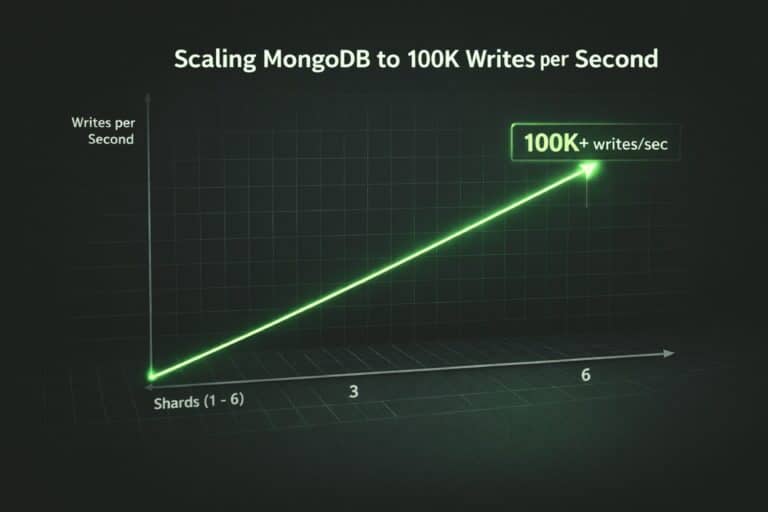
Sustaining 100K+ writes per second in MongoDB is not a tuning trick — it is an architectural decision. This article breaks down how to design a sharded cluster using realistic Atlas hardware (32GB RAM, 8 CPU, standard storage) and achieve linear horizontal scaling through deterministic shard key distribution, clean write paths, and disciplined index strategy.
Data quality is not a downstream fix.
It is a structural property of the system.
Only when data management decisions converge into a Golden Record does quality become measurable, explainable, and governable over time.
AI tools and agents are reshaping software development by transforming how legacy systems are modernized.
Rather than focusing on code generation alone, Generative AI enables deeper understanding of existing applications, data, and dependencies. By combining AI agents, structured analysis, and modern data platforms, organizations can accelerate legacy modernization, reduce risk, and evolve complex systems continuously instead of relying on costly, one-time rewrites.
Master Data Management is not about consolidating records or choosing a system of record.
It is about defining how truth is constructed when systems disagree.
This monograph presents a production-grade MDM pattern based on attribute-centric Golden Records, explicit governance, and temporal versioning. From ingestion to conflict resolution, it shows how truth is composed, explained, and preserved over time in real enterprise architectures.
End of content
End of content
Search the archive
Search more than 90 articles across data, AI, public-sector transformation, technology and culture.