The Space Between Sounds

Vinyl and high-resolution streaming seem like opposite worlds. But when the system gets out of the way, they start to converge. Not in sound. In space.

Hi-Res Audio is dedicated

The Space Between Sounds

Vinyl and high-resolution streaming seem like opposite worlds. But when the system gets out of the way, they start to converge. Not in sound. In space.

Hi-Res Audio is dedicated

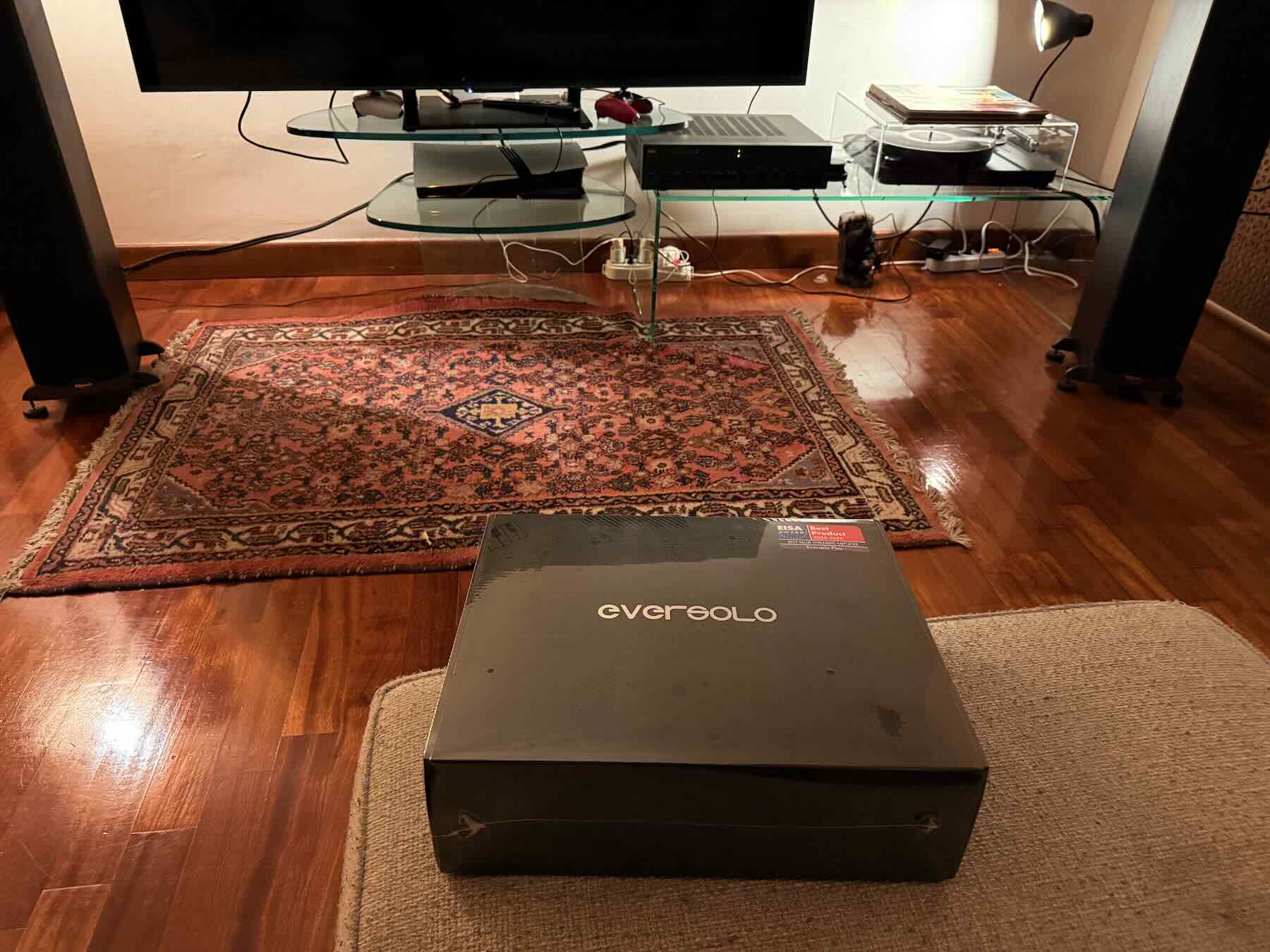
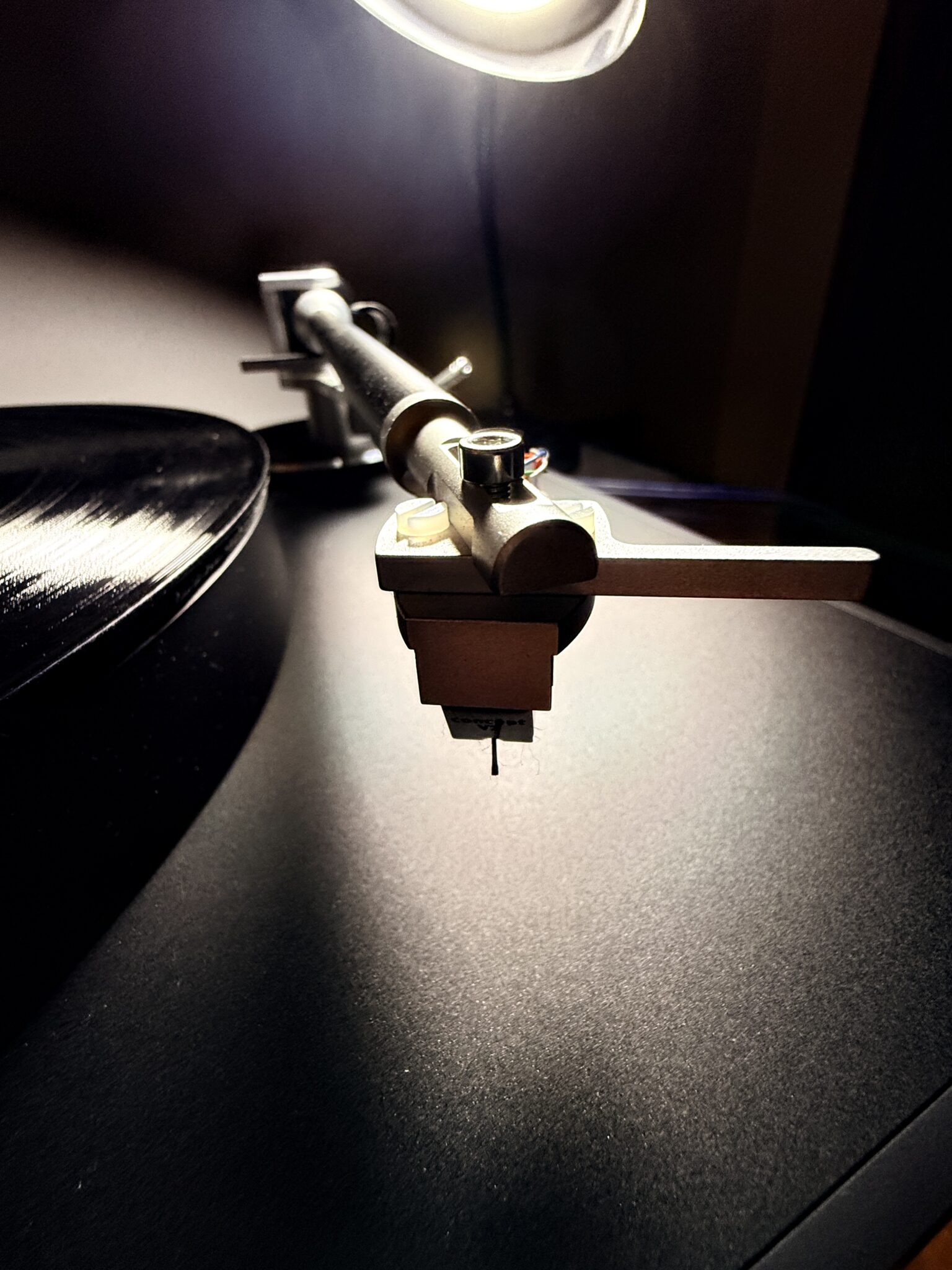
There was a moment, somewhere between lowering a needle on a record and powering on the Eversolo,

where something clicked. Two completely different worlds.

On one side, vinyl: Physical, imperfect, almost fragile.

On the other, high-resolution streaming: Clean, precise, almost invisible.

And yet, they seem to converge.

For years, digital audio felt like a compromise.

Convenient, yes. Accurate, maybe. But always slightly… constrained.

Vinyl was different. Not because it was “better”. But because it felt open.

Imperfect, but alive.

The Space Between Sounds Hi-Fi Music Streamer That Combines Exceptional Sound Quality With Futuristic Technology
Hi-Fi Music Streamer That Combines Exceptional Sound Quality With Futuristic Technology

Not to replace vinyl. Not to chase audiophile perfection.

Just to see what happens when the digital chain stops interfering.

Qobuz delivers music in high-resolution formats, up to 24-bit / 192 kHz.

Essentially, closer to what leaves the recording studio.

Eversolo plays it as is. No resampling. No unnecessary processing. No shortcuts in the signal path.

And something interesting happens. The gap between vinyl and digital starts to close.

Not in tone. Not in warmth. Not in “character”.

In space. You begin to notice how sound is placed.

  • a voice slightly ahead
  • a synth further back
  • a reverb tail that doesn’t collapse
  • silence that actually separates things

It’s not more detail. It’s more distance. Vinyl does this in its own way. Through its limitations, it creates a sense of depth that feels natural.

High-resolution digital, when done right, achieves something similar. Not by adding color. But by removing constraints. The result is subtle. Almost frustratingly so.

You don’t sit down and say “this is better”.

You just stop thinking about the system. And when you go back, you notice it.

Everything is still correct. But closer. Flatter. Less dimensional. Maybe it’s the DAC. Maybe it’s the mastering. Maybe it’s just attention.

Or maybe we’re finally getting closer to something that was always there.

Not the sound itself.

But the space it lives in. Because in the end, music is not just what you hear.

It’s the distance between things. The silence that separates them. The room they create together.

And once that space opens up, everything else becomes secondary.

.

Suggested Reading

  • Mario Noioso su Amazon: Chi possiede la memoria possiede il futuro

    Mario Noioso pubblica su Amazon “Chi possiede la memoria possiede il futuro”, un saggio su memoria, conoscenza, tecnologia, intelligenza artificiale e potere.

  • So, You Bought a Used NAD 306? Here is Your Vintage Survival Guide

    Just bought a vintage NAD 306 integrated amplifier? Don’t panic. Check out this guide for essential NAD 306 maintenance to keep it singing for years.

  • Can Europe really build a sovereign technology stack on community-driven open source?

    Open source is essential to Europe’s technology sovereignty debate. But it is not a magic word.

    The real question is deeper: who governs, maintains, secures and evolves the stack when it becomes critical infrastructure?

  • The Great Reorg: The End of Organizations as We Know Them

    AI is not simply accelerating work.
    It may be reshaping how organizations are structured, how decisions flow, and how coordination happens.
    What is emerging is not just efficiency.
    It looks closer to a structural shift.

  • From Developer to AI Supervisor

    When AI writes the code, the real job moves somewhere else Something quiet but structural…

  • Gödel, Escher, Bach: learning to think by walking in circles

    Some books are not meant to be read linearly. They pull you into a recursive journey where music, art, and mathematics begin to speak the same language. Gödel, Escher, Bach is one of those rare works that teaches you not what to think, but how thinking itself folds back on itself.