ESP8266 and the Moment IoT Became Accessible

Before IoT platforms became enterprise infrastructure, low-cost devices like the ESP8266 made cloud-connected hardware accessible to anyone. A look back at the moment when embedded systems, Wi-Fi, and cloud services first converged.

ESP8266 to IBM Watson IoT platform

ESP8266 and the Moment IoT Became Accessible

Before IoT platforms became enterprise infrastructure, low-cost devices like the ESP8266 made cloud-connected hardware accessible to anyone. A look back at the moment when embedded systems, Wi-Fi, and cloud services first converged.

ESP8266 to IBM Watson IoT platform

Before “IoT platforms” became a line item in enterprise architecture diagrams, there was a moment when connectivity stopped being expensive, proprietary, and rare.

The ESP8266 was part of that moment.

Produced by Espressif, the ESP8266 quietly lowered the barrier to connected hardware. A tiny Wi-Fi-enabled microcontroller, cheap enough to experiment with, powerful enough to matter. When the ESP-01 module surfaced through AI-Thinker, it spread quickly through maker communities not because it was polished, but because it was possible.

For the first time, connectivity felt approachable.

What made the ESP8266 truly interesting, though, was not just its price. It was its compatibility. By embracing the Arduino ecosystem, the chip blurred the line between professional embedded development and weekend experimentation. Suddenly, Wi-Fi, sensors, and cloud services were no longer separate disciplines. They were part of the same conversation.

That convergence mattered.

Connecting an ESP8266 to cloud platforms such as IBM Watson IoT Platform was less about the specific SDK or protocol and more about the shift it represented. MQTT, device identity, telemetry streams. Concepts that once lived in industrial systems were now accessible from a kitchen table.

This article comes from that phase.

A time when “cloud + hardware” was still a novelty, not an assumption.

Looking back, the ESP8266 was never just a cheap chip. It was an early signal that devices were about to become first-class citizens of the internet, long before the term “edge computing” entered the mainstream vocabulary.

The rest of the article documents how that connection was made.

Not because the steps still matter today, but because the mindset does.
connect an ESP8266 to IBM Watson IoT Platform with Arduino SDK
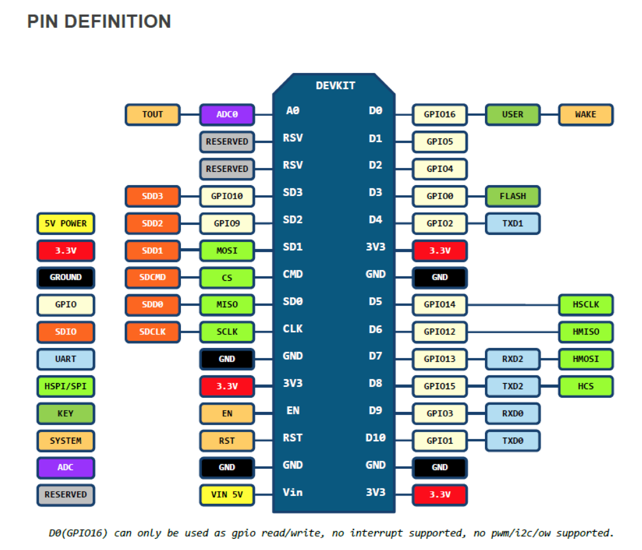
ESP2866 chip layout


Suggested Reading

  • |

    Turkiye Sovereignty and the Shift Beyond Europe

    Türkiye’s first hyperscale cloud region is not just infrastructure. It shows that sovereignty is becoming a design principle shaping how nations build and control their digital stack.

  • |

    The Space Between Sounds

    Vinyl and high-resolution streaming seem like opposite worlds.
    But when the system gets out of the way, they start to converge.
    Not in sound.
    In space.

  • | |

    The Great Reorg: The End of Organizations as We Know Them

    AI is not simply accelerating work.
    It may be reshaping how organizations are structured, how decisions flow, and how coordination happens.
    What is emerging is not just efficiency.
    It looks closer to a structural shift.

  • |

    Beyond Hyperscalers: MongoDB Offerings Across Europe’s Sovereign Clouds

    A practical map of MongoDB offerings across Europe’s sovereign cloud providers. Explore where MongoDB is available, how it is delivered, and access direct links to deploy it across DBaaS, Kubernetes, and managed platforms.

  • | |

    Beyond Code Translation: Why Your COBOL Modernization Should Skip the Relational Trap

    Forget the double migration. Use AI-driven semantic analysis to leap directly from Mainframe to document-oriented…