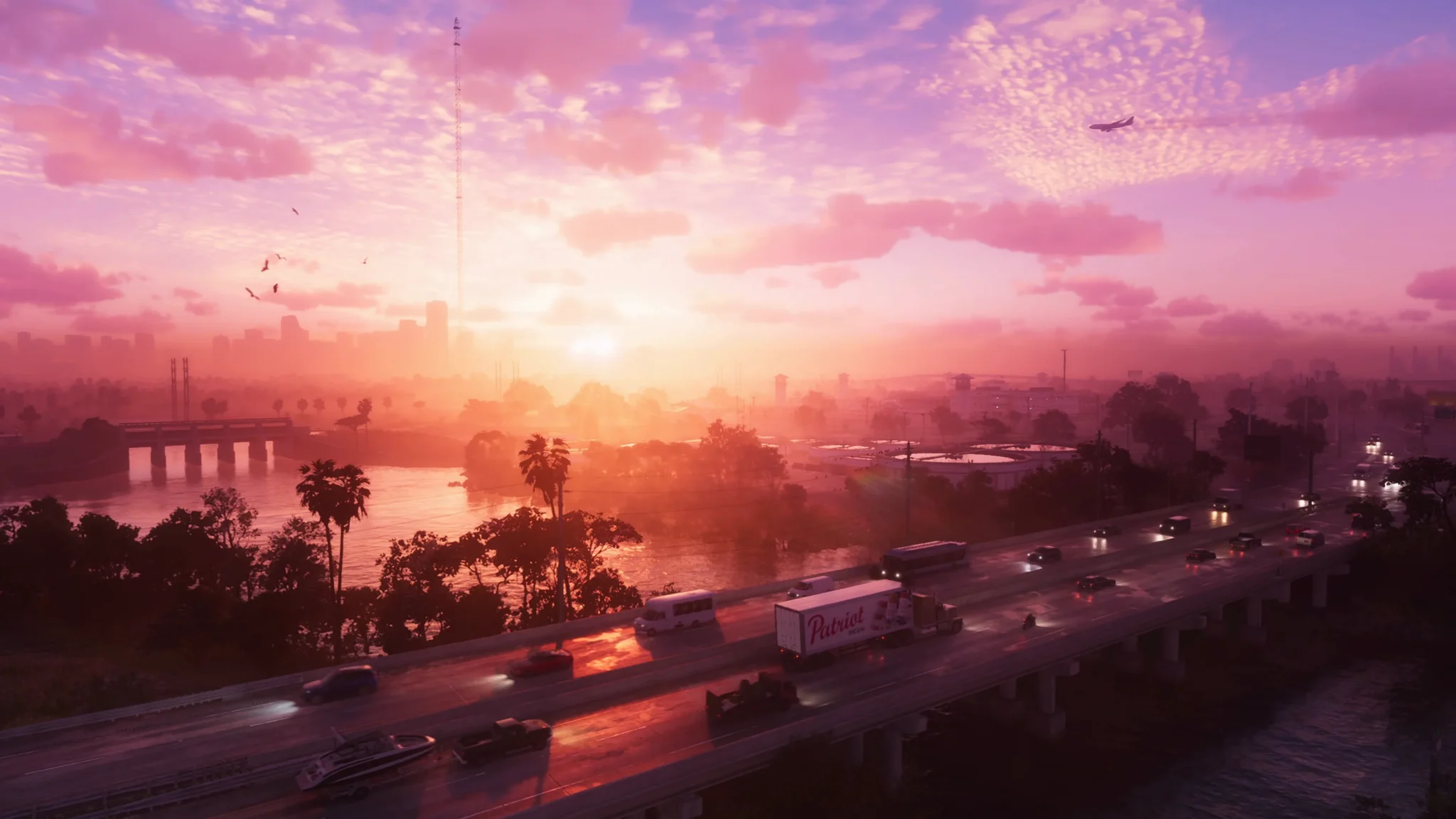
Somewhere in PwC’s TMT practice, a group of partners signed off on a strategy paper about Vice City. Not about the video game industry in general. About one title, from one studio, shipping on one Thursday. The paper advises media and entertainment executives to decide, before November 19, whether they intend to compete with Grand Theft Auto VI for people’s attention or align with it. I have spent thirty years around enterprise technology and I cannot remember a Big Four firm treating a piece of software as weather. That, more than any trailer, is the tell. GTA 6 is not being covered as a game launch. It is being covered as a scheduled outage of the attention economy, and everyone with a calendar is planning around it.
The Guardian, the Washington Post, the Times and Fortune have all run the same story in the last ten weeks, each from its own desk: culture, business, television, box office. Read together they describe a single event with the properties of infrastructure, and that is the lens I want to apply here, because infrastructure is what I do for a living.
The numbers are capacity numbers
Start with the figures, because they are not entertainment figures, they are load figures. According to Sensor Tower estimates reported by Fortune, GTA VI had about 6.45 million digital pre-orders worth roughly 630 million dollars by October 20, physical copies excluded. That is more than the entire domestic theatrical run of Christopher Nolan’s The Odyssey. The whole North American box office over Halloween weekend was about 56 million dollars; the game’s pre-orders alone are eleven times that, and the game has not shipped.
The precedent is the reason nobody doubts the projection. Grand Theft Auto V made 800 million dollars in its first 24 hours in 2013 and passed a billion in three days, two days faster than Avengers: Endgame would manage six years later. It has since sold more than 230 million units and is still, in July 2026, pulling an estimated 50 million hours of Twitch viewing a month. Take-Two guides to 8 billion dollars or more in net bookings this fiscal year on the strength of a single release. The reported development budget sits north of a billion dollars, higher than any film ever made.
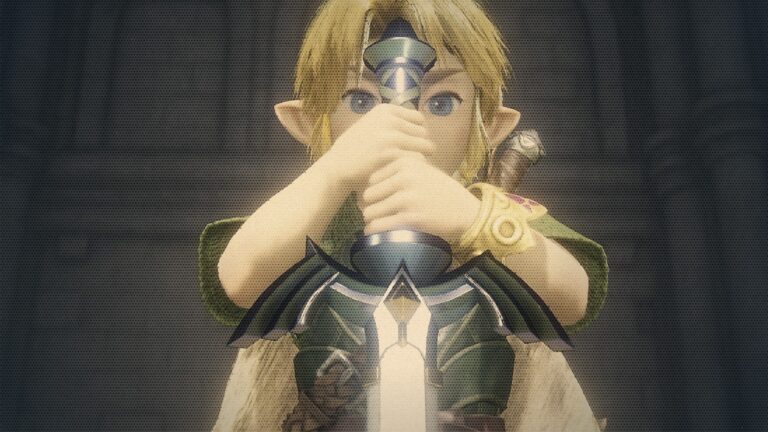
Thirteen years separate the two games. That cadence is not an accident of production hell, it is the business model. Rockstar ships a new world roughly once a decade, and in the gap it sells anticipation. I wrote about the two opposite memory strategies in gaming in the piece on the Ocarina of Time remake: Nintendo sells recollection, Rockstar sells the wait. A thirteen-year wait is a generational event. People who were in school for GTA V will buy GTA VI with their own salaries, and their children will watch them do it.
The trailer was a première
On August 27 Rockstar did something no game studio had done at this scale: it gave the first real look at gameplay, a 26-minute “Extended Look”, to Netflix as a six-hour exclusive before YouTube. The Washington Post called the result the biggest pop media event of the year, possibly the decade, and the data it cited backs that up: the video went straight to number one on Netflix’s chart, and Rockstar’s own site went down for several minutes under the load. The Guardian’s Pushing Buttons newsletter added the second-screen figures from Eurogamer: more than 9,000 Twitch streamers covered the premiere, for 5.2 million hours of viewing on that platform alone. A trailer, treated by the audience as a season finale.
The Times read the Netflix deal for what it is: a streaming platform that has spent years trying to become a gaming company discovering that the cheaper route is to become the venue where gaming happens. Netflix already carries the original GTA trilogy in its games catalogue. Hosting the preview turns a subscriber base into a premiere audience, and it tells the industry which screen is the first screen now.
Then there is the music, which is the cleanest measurement of cultural reach we have. When the first trailer used Tom Petty’s “Love Is a Long Road”, the song’s Spotify streams rose by more than 37,000 percent. When the second used the Pointer Sisters’ “Hot Together”, a 1986 single, reports put the jump at around 182,000 percent. The original score is by Justice. A game’s marketing is now a programming slot that labels bid for, which is exactly how PwC frames it: the soundtrack as a sync and catalogue opportunity for rights holders.
The calendar bends around it
Here is where the story stops being about a game. Fortune’s box office column names GTA VI as the main competitor for Hollywood’s November, not another film. The Hunger Games: Sunrise on the Reaping opens on November 20, one day after the game, with long-range tracking around 55 to 65 million dollars; the studio is holding the date and hoping the audiences do not overlap too much. The other video game publishers did not take that risk. They vacated the month entirely, which is why the autumn release schedule looks like an evacuation route.
PwC’s paper goes further and models the second-order effects. A study it cites found that time-off requests around the release date run 9 to 17 percent above normal, which the firm describes as a possible work blackout. Holiday streaming may fail to repeat the record 2025 season that Stranger Things delivered. Live sports is expected to hold up best for a precise engineering reason: it is the one content type that cannot be paused and resumed after the heist. Food delivery orders go up; DoorDash data shows gamers ordering 70 percent more often than other users. Even Miami’s tourism board gets a mention, on the model of what KPop Demon Hunters did for a Seoul neighbourhood. None of these are forecasts in the strict sense, PwC hedges every one of them. But a consulting firm does not publish hedged scenarios about a Nintendo release. It publishes them when its clients are asking.
A consulting firm does not publish hedged scenarios about a Nintendo release. It publishes them when its clients are asking.
Attention as a finite resource, and a peak load you can see coming
In my work the dangerous events are never the ones you cannot predict. They are the ones you can predict exactly and still fail to provision for: tax deadlines, ticket sales, the first day of an enrolment window. Everyone knows the date; the question is only whether the system was designed for the peak or for the average. GTA VI is that kind of event, applied to human attention instead of database throughput. The date is fixed, the demand is measurable in pre-orders, the duration is known from the previous release, and every other producer of attention-consuming content has to decide whether to run at reduced capacity for a few weeks or to route around the outage entirely.
What makes this possible is rarer than it looks. We live inside personalised feeds and algorithmic playlists that split the audience into millions of private channels. Almost nothing can command a genuinely shared moment any more; the Super Bowl, a royal funeral, perhaps a World Cup final. A thirteen-year-old franchise with a billion-dollar budget has joined that list, and it did so with software. Rockstar’s real product is not Vice City. It is a synchronised instant in which a very large number of people agree to look at the same thing, and the scarcity of such instants is precisely why PwC, Netflix and Lionsgate are paying attention.
There is a data story underneath, too. The game ships with Snapmatic, an in-world social network, and a modern-day Vice City that will be photographed, streamed and clipped by tens of millions of players within hours. Rockstar is not only building a world; it is building the recording apparatus for the memory of that world, which is why a leaked build last year was treated like a theft of the crown jewels. Lucia, the first playable female lead in the series’ thirty-year history, will be the most photographed fictional person on the planet by Christmas. The company that owns the world owns the terms on which it is remembered.
November 19
Pre-loading starts on November 10, which is a release date in its own right now: the night the bits arrive on the disk and sit there, inert, for nine days. Then on Thursday, November 19, PlayStation 5 and Xbox Series consoles light up in the same hour across every time zone, PC players wait for 2027, and the rest of the entertainment industry finds out whether its capacity planning was right. Whatever the reviews say, the launch has already done something no film, album or television season has managed in years: it made the whole industry look at one calendar square and agree, for once, on what mattered. I will be one of the people looking. Professionally, of course.
Newsletter
Get the next essay before it goes out anywhere else.
New essays and each new field guide, by email. Free, no ads, one-click unsubscribe.
Field guides only? Choose your list.
-
 Essay · Technology Culture
Will AI Replace Programmers? What Three Waves of Automation Taught Me
No, and yes. AI will not replace the programmer; it is replacing most of what programmers spent their day typing. I have watched this happen twice before, at IBM and in the cloud years. Here is what changed each time, and what to do now.
-
Essay · Data & AI
12 Books on Data and Power
Twelve books, eleven from Wired’s seasonal thirty plus one of my own, on how compute, data and the state became one conversation.
-
Essay · Technology Culture
Ocarina of Time Remake: Nintendo Is in the Memory Business
The remake lands on Switch 2 as a rapturous review and a holiday-quarter bet. Nintendo’s real product is a memory, re-embodied and resold.
-
Hi-Fi · Technology Culture
Less Is More: My Hi-Fi System, Reduced to Three Boxes
I rebuilt my hi-fi around one rule: every box must justify its place. Three survived. Notes on minimalist listening.