Before “IoT platforms” became a line item in enterprise architecture diagrams, there was a moment when connectivity stopped being expensive, proprietary, and rare.
The ESP8266 was part of that moment.
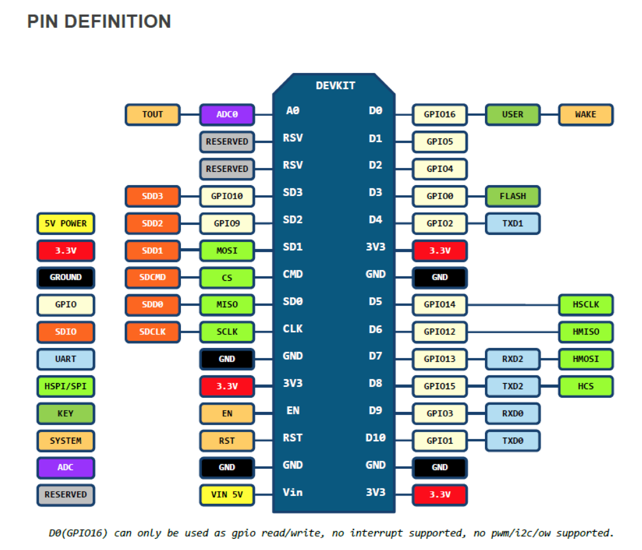
Produced by Espressif, the ESP8266 quietly lowered the barrier to connected hardware. A tiny Wi-Fi-enabled microcontroller, cheap enough to experiment with, powerful enough to matter. When the ESP-01 module surfaced through AI-Thinker, it spread quickly through maker communities not because it was polished, but because it was possible.
For the first time, connectivity felt approachable.
What made the ESP8266 truly interesting, though, was not just its price. It was its compatibility. By embracing the Arduino ecosystem, the chip blurred the line between professional embedded development and weekend experimentation. Suddenly, Wi-Fi, sensors, and cloud services were no longer separate disciplines. They were part of the same conversation.
That convergence mattered.
Connecting an ESP8266 to cloud platforms such as IBM Watson IoT Platform was less about the specific SDK or protocol and more about the shift it represented. MQTT, device identity, telemetry streams. Concepts that once lived in industrial systems were now accessible from a kitchen table.
This article comes from that phase.
A time when “cloud + hardware” was still a novelty, not an assumption.
Looking back, the ESP8266 was never just a cheap chip. It was an early signal that devices were about to become first-class citizens of the internet, long before the term “edge computing” entered the mainstream vocabulary.
The rest of the article documents how that connection was made.
Not because the steps still matter today, but because the mindset does.
Newsletter
Get the next essay before it goes out anywhere else.
New essays and each new field guide, by email. Free, no ads, one-click unsubscribe.
Field guides only? Choose your list.
-
 Book · Technology Culture
What Kirkus Reviews Said About My Book, Including the Part I Agree With
Kirkus Reviews has read Who Owns Memory Owns the Future and filed its verdict: Get It. The praise is welcome. The criticism is the more useful half.
-
Essay · Technology Culture
Will AI Replace Programmers? What Three Waves of Automation Taught Me
No, and yes. AI will not replace the programmer; it is replacing most of what programmers spent their day typing. I have watched this happen twice before, at IBM and in the cloud years. Here is what changed each time, and what to do now.
-
Explainer · Data & AI
What Is an AI Agent, Really? Agentic AI Explained Beyond the Buzzword
An AI agent is software that pursues a goal by deciding, acting through tools and checking the result, in a loop. Most of what is sold as agentic AI is not that. Here is the test, and what makes agents work in production.
-
Essay · Data & AI
12 Books on Data and Power
Twelve books, eleven from Wired’s seasonal thirty plus one of my own, on how compute, data and the state became one conversation.