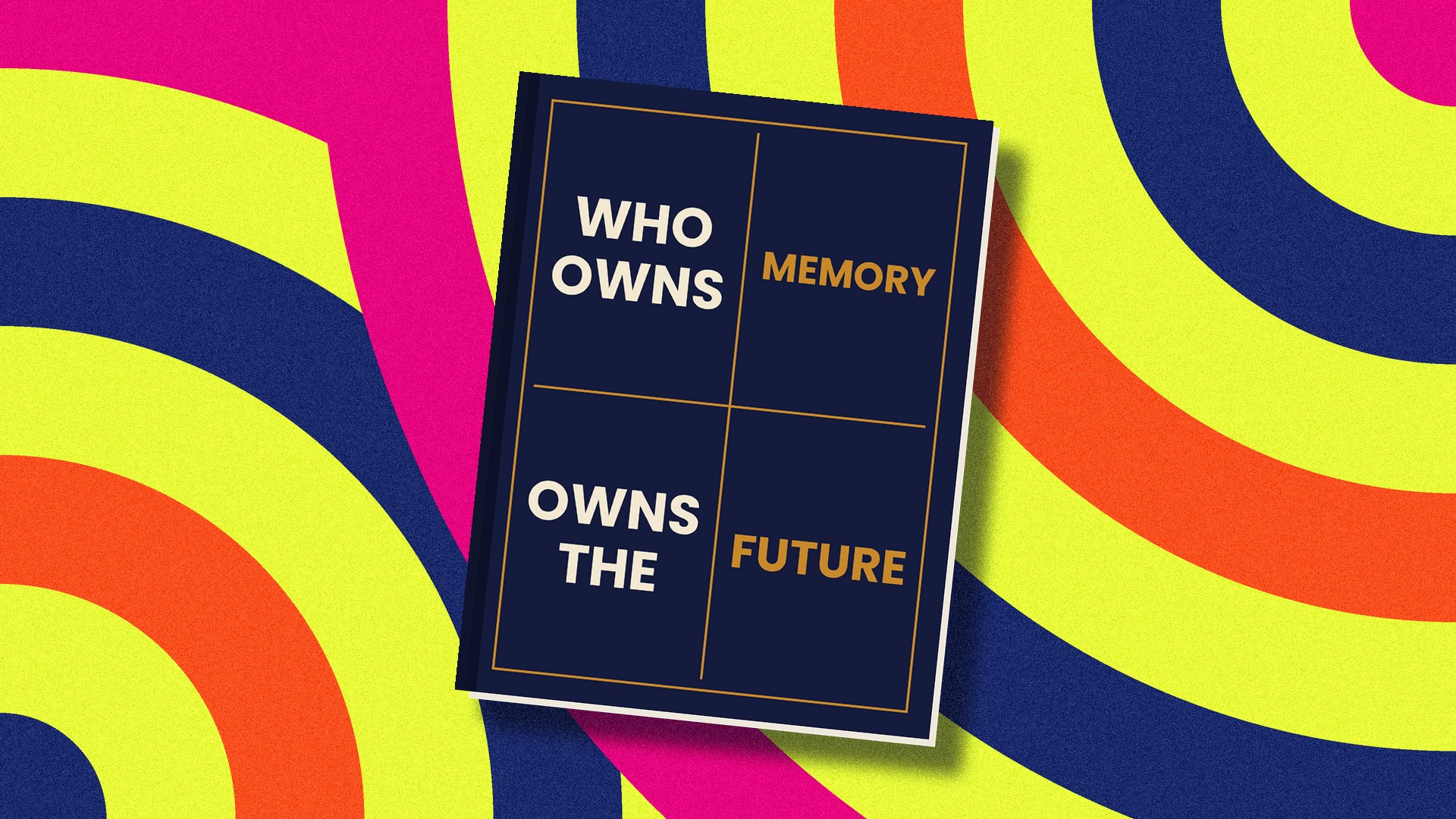
Kirkus Reviews has been reading books for a living since 1933, and its reviewers are not known for kindness. So when the verdict on Who Owns Memory Owns the Future came back as Get It, I read the whole thing twice: once for the compliment, once for the bill.
“A brief, incisive entry in an underexplored debate.”
Kirkus Reviews
What the reviewer saw
The review reads the book the way I hoped it would be read: as one argument stretched across a very long timeline. It follows the thread from the grain records of the first cities to the memory of today’s machines, and it notices that the small historical details are doing real work, not decoration. Most of all, it lands on the question the last chapters are built to raise. If every freedom we have runs on a data infrastructure that somebody designed and somebody operates, what room is left for democracy?
That is the question I have carried for thirty years of building those infrastructures, from IBM mainframes to the data platforms of European public institutions. Seeing an outside reader arrive at it without my help is the best thing a review can give an author.
The part I agree with
The review also says the book moves too fast. Whole eras go by in a paragraph, and some passages stay at the level of an introduction. Both observations are correct, and both are the price of a decision I would make again.
This is a book of 114 pages. I wanted something a minister, a CIO or a student could finish on a flight between Rome and Brussels and still have time to argue with. A history of memory and power that gave steam, electricity and the bomb the space they deserve would run to six hundred pages and would be read by the people who already agree. I chose the short version and accepted that historians would wince. The reviewer winced, politely, and recommended the book anyway.
If the speed leaves you wanting more depth, the longer arguments live on this site: in 12 Books on Data and Power for the reading behind the thesis, and in the essays filed under Data & AI for what it means in practice when machines start to remember.
Where to read it
The full review is on the Kirkus site: Who Owns Memory Owns the Future by Mario Noioso, reviewed by Kirkus. The book is available as a paperback and ebook on Amazon and as an ebook on Google Play. Everything else about it is on the book page.
Disclosure: the review was written through Kirkus Indie, the program that lets independent authors submit a book for an unbiased professional review. The fee pays for the reading, not for the verdict, which Kirkus alone decides.
Newsletter
Get the next essay before it goes out anywhere else.
New essays and each new field guide, by email. Free, no ads, one-click unsubscribe.
Field guides only? Choose your list.
-
 Essay · Technology Culture
Will AI Replace Programmers? What Three Waves of Automation Taught Me
No, and yes. AI will not replace the programmer; it is replacing most of what programmers spent their day typing. I have watched this happen twice before, at IBM and in the cloud years. Here is what changed each time, and what to do now.
-
Essay · Data & AI
12 Books on Data and Power
Twelve books, eleven from Wired’s seasonal thirty plus one of my own, on how compute, data and the state became one conversation.
-
Essay · Technology Culture
Ocarina of Time Remake: Nintendo Is in the Memory Business
The remake lands on Switch 2 as a rapturous review and a holiday-quarter bet. Nintendo’s real product is a memory, re-embodied and resold.
-
Hi-Fi · Technology Culture
Less Is More: My Hi-Fi System, Reduced to Three Boxes
I rebuilt my hi-fi around one rule: every box must justify its place. Three survived. Notes on minimalist listening.