Maximo Work-Order from an IoT device
In my previous article I shown how to connect my Texas Instrument SensorTag to the cloud. I was able to catch the environment temperature, the environment light and the air pressure and I displayed the real-time data on a web dashboard.
In this article I’m showing you how to create a Maximo Work-Order from an IoT device. I used the sensorTag to monitor the room’s temperature and if the detected temperature is more than 23° Celsius a Work-Order (WO) is opened against Maximo. The WO consists in an asset inspections for maintenance (the asset is my room conditional unit).
To implement the scenario I used node-RED on Bluemix. Node-RED is a tool for wiring together hardware devices, APIs and online services in new and interesting ways. Node-RED is based on Node.js, the applications run as a web server, and you customize and manipulate functional “flows”. I extended my previous IoT flow with a switch node and with a http request node. When the ambient temperature is less than 23° Celsius the switch node routes the flow in the debug window, contrariwise when the ambient temperature is more (or equal) to 23° Celsius the switch node routes the flow versus the http request node. In this case a Maximo rest API is invoked to open a Work Order. Here the complete node-RED flow:

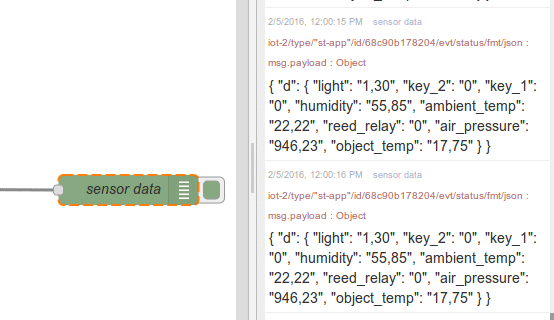
The input node receives events sent from devices, by lightweight MQTT messaging protocol, and it produces an object called msg and sets msg.payload to be a string containing the payload of the incoming message. I wired the input node with a debug node to check in real-time the data sent from my device:
In the http request node I set in the URL parameter the Maximo rest API to open a WO:

I wired the http request node with a debug node to check in real-time the Work-Order created, in debug windows I am able to receive the classic XML response from Maximo integration framework:
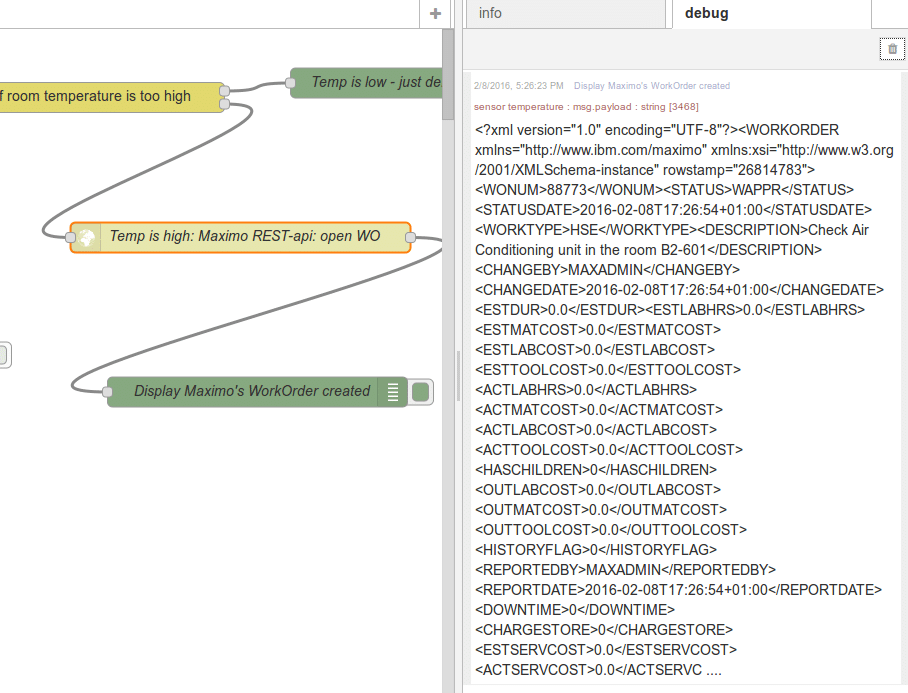
Of course to implement this flow type the Maximo server must be reachable from node-RED over Internet to call the rest API. Here the Maximo Work-Order from an IoT device:

According IBM estimate, by 2020 over 470 million smart connected major home appliances will be installed globally. From refrigerators, clothes dryers and dishwashers to coffee machines, robotic vacuums and electric toothbrushes, IBM is helping the electronics industry capitalize on the promise of the Internet of Things. The future is to collect data from connected devices and apply advanced analytics to reveal insights in real time.
In my simple example I addressed a real Customer scenario using a fully integrated cloud-based IoT solution, building logic around device data to enable asset maintenance on Maximo, but the possible scenarios are countless and I will try to explore it 🙂
Comments and feedbacks are welcomed.
Newsletter
Get the next essay before it goes out anywhere else.
New essays and each new field guide, by email. Free, no ads, one-click unsubscribe.
Field guides only? Choose your list.
-
 Book · Technology Culture
What Kirkus Reviews Said About My Book, Including the Part I Agree With
Kirkus Reviews has read Who Owns Memory Owns the Future and filed its verdict: Get It. The praise is welcome. The criticism is the more useful half.
-
Essay · Technology Culture
Will AI Replace Programmers? What Three Waves of Automation Taught Me
No, and yes. AI will not replace the programmer; it is replacing most of what programmers spent their day typing. I have watched this happen twice before, at IBM and in the cloud years. Here is what changed each time, and what to do now.
-
Explainer · Data & AI
What Is an AI Agent, Really? Agentic AI Explained Beyond the Buzzword
An AI agent is software that pursues a goal by deciding, acting through tools and checking the result, in a loop. Most of what is sold as agentic AI is not that. Here is the test, and what makes agents work in production.
-
Essay · Data & AI
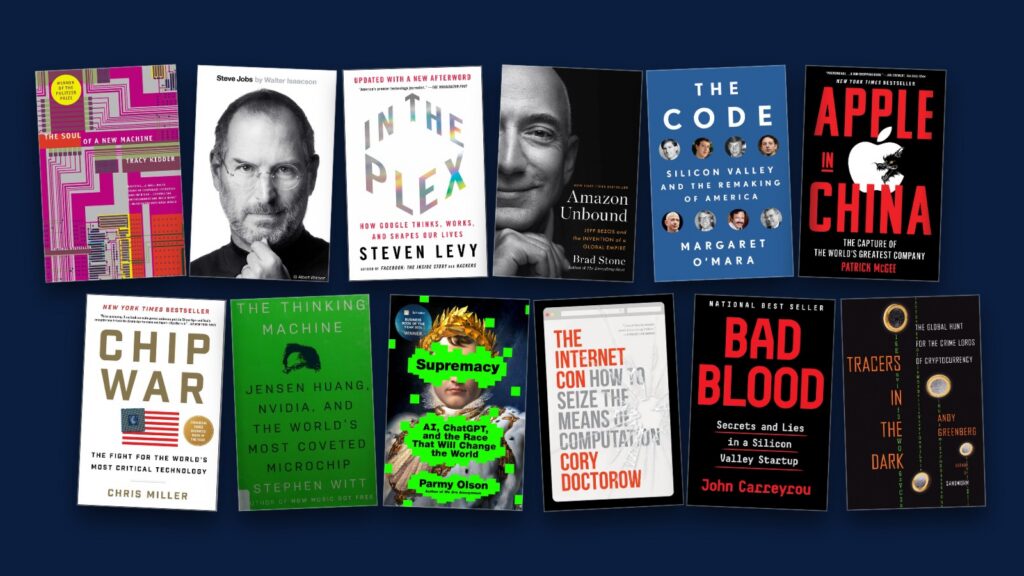
12 Books on Data and Power
Twelve books, eleven from Wired’s seasonal thirty plus one of my own, on how compute, data and the state became one conversation.