In my previous article I designed and implemented a simple Proof of Concept to offers a pattern recognition solutions for automatic quality control in production processes. The IBM Watson feature extraction and machine learning techniques are used to design classification systems for a variety of image-based inspection tasks.
In this second part of PoC I’ve used Watson visual recognition in wine glass production process. To goal is to identify the glass type produced by images and to increment meters associated to the productions.
Usually Customer uses mechanical devices to count the number of glasses produced for every glass type, the idea is to use the Watson visual recognition to identify the glass type. For this PoC a node-RED flow recognize a couple glass, a sparkling glass or a Chianti glass.
Watson visual recognition service is different from classic pattern matching visual recognition, because to recognize a glass it is not necessary to compare an glass image too similar to the matching model, the service is based on a machine learning, in training phase the service learns to recognize a glass class by very different type of images for that glass class, so a glass can be recognize although the image is very different from matching model.
For the sparkling glass I trained the machine learning with the following images, as you know the service learned about what is a sparkling glass from very different type of sparkling glasses:

For the coupe glass I trained the machine learning with the following images:

and for the chianti glass I trained the machine learning with the following images:

As for the previous scenario I grouped the images to define a single classifier, I prepared a zip with positive examples images and a zip with negative examples images. I used a service rest API to create the classifier and complete the training phase.
I build my POC with node-RED to automate the following end-to-end scenario:
- I simulated a visual inspection system for high-speed checking of wine glass production line
- The images are uploaded on a cloud storage
- A node-RED flow analyze periodically the uploaded images
- A quality score is calculated by Watson visual recognition API
- Maximo asset manager meters are updated with the piece produced, I created three meters associated to production line: coupe glass meter, sparkling glass meter and chianti glass meter
- A web dashboard shows in real-time the number of glasses produced for every class
Here is my node RED flow:

The node-RED flows is based on the following logic sections:
- nodes to fetch the image files from a cloud storage, I’m using google drive, where the image are uploaded from IoT devices attached to the production line
- nodes to assemble and call the rest-API’s URL of Watson visual recognition service
- nodes to send data to dtweet.io service, I’m using the freeboard web dashboard with a dtweet datasource
- nodes to assemble and call the rest-API’s URL of Maximo meters update service
Here is the demo dashboard, currently my POC is up&running, every 10 seconds a glass is produced:

Here is my Maximo application with the real-time meters:

thanks to reading !
Newsletter
Get the next essay before it goes out anywhere else.
New essays and each new field guide, by email. Free, no ads, one-click unsubscribe.
Field guides only? Choose your list.
-
 Book · Technology Culture
What Kirkus Reviews Said About My Book, Including the Part I Agree With
Kirkus Reviews has read Who Owns Memory Owns the Future and filed its verdict: Get It. The praise is welcome. The criticism is the more useful half.
-
Essay · Technology Culture
Will AI Replace Programmers? What Three Waves of Automation Taught Me
No, and yes. AI will not replace the programmer; it is replacing most of what programmers spent their day typing. I have watched this happen twice before, at IBM and in the cloud years. Here is what changed each time, and what to do now.
-
Explainer · Data & AI
What Is an AI Agent, Really? Agentic AI Explained Beyond the Buzzword
An AI agent is software that pursues a goal by deciding, acting through tools and checking the result, in a loop. Most of what is sold as agentic AI is not that. Here is the test, and what makes agents work in production.
-
Essay · Data & AI
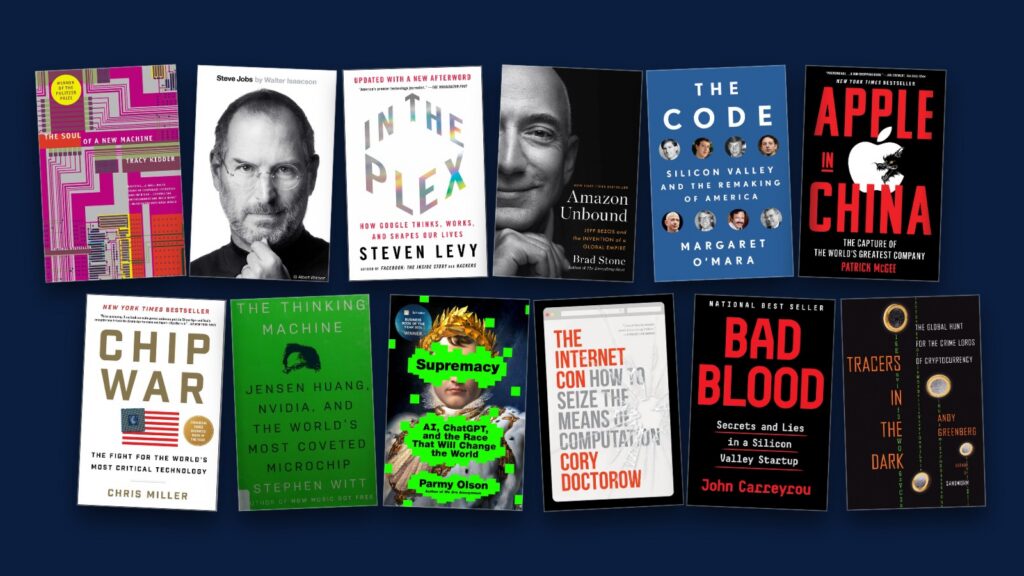
12 Books on Data and Power
Twelve books, eleven from Wired’s seasonal thirty plus one of my own, on how compute, data and the state became one conversation.